Truck Owners and Drivers Association of West
By the Truckers, For the Truckers.
Truckers need to unite to get a rule changed, a law passed, a treaty renegotiated or a regulator moved — which is why a Global Network of associations exists.
Broker rate transparency
Federal rulemakingFederal regulation gives operators a right to see the transaction record behind a load. In practice, requesting it costs you the lane. Enforcement, not the rule itself, is the gap, and only the regulator can close it.
Detention time is unregulated
Federal rulemakingThere is no federal standard requiring shippers or receivers to pay for hours a driver spends waiting at the dock. Until detention is defined and priced in regulation, it stays a cost transferred onto the smallest operator.
Independent contractor classification
Federal legislationThe legal status of the owner-operator is contested at federal and state level. Rules written for gig platforms reach a business model that has existed for eighty years, and owner-operators are rarely at the table when they are drafted.
Lease-purchase agreements
Federal oversightLease-purchase structures transfer equipment risk to the driver while the carrier keeps the freight. A federal task force has examined the practice; converting findings into enforceable limits requires legislation.
State emissions authority
Regulator / federal waiverCalifornia's ability to set vehicle standards ahead of federal rules shapes equipment economics for every operator running into the state. Whether that authority stands is decided in Washington and in the courts, not by the operators who must comply.
Zero-emission mandates ahead of infrastructure
State legislationFleet requirements arrive on timetables set before the charging and hydrogen network exists. The gap between mandate and infrastructure is carried by the owner.
Port drayage regulation
Port authority / stateDrayage registries, appointment systems and clean truck rules are set by port authorities and air districts. Drayage operators are consulted late, if at all.
Worker classification in California
State legislationState classification law puts the owner-operator model itself in question. The outcome determines whether a one-truck business can legally contract at all.
Truck parking capacity
Federal fundingThe national shortage of truck parking is an infrastructure funding question, not a driver behaviour question. Drivers are cited for parking where there is nowhere legal to stop.
Insurance minimums and nuclear verdicts
Federal and state legislationProposals to raise minimum liability coverage, combined with large jury awards, price across the whole pool. A clean single-truck operator carries the cost of someone else's catastrophic claim.
Each of these answers something on the list above. This is the work of moving those decisions, not a catalogue of services.
Files in every docket that reaches the owner-operator
Formal submissionComment lodged on rate transparency, detention, hours and equipment rulemaking, with positions drawn from what members report rather than from industry consensus.
Builds the detention record the regulator does not have
Member evidenceDwell logged by members lane by lane, so detention can be argued with data rather than anecdote.
Defends the owner-operator as a lawful business form
Legal and legislativeClassification proposals are met with the case for the one-truck operator, in Washington and in each state that legislates separately.
Puts the single-truck cost base into state emissions rulemaking
Formal submissionFleet requirements are drafted around fleets. The Association files the numbers for an operator with one truck and no depot.
Tests zero-emission timetables against the infrastructure that exists
Member evidenceCharging availability on real routes, documented and submitted alongside the mandate.
Reads lease-purchase agreements before a member signs one
Direct representationContract review, and a shared record of which structures have cost members their trucks.
Negotiates on fuel, tyres, insurance and maintenance
Collective bargainingA thousand operators buying together pay less than a thousand buying alone.
Four Ways for Truckers of the World, Unite!
Associates
Truck owners, drivers, owner-operators, motor carriers, companies and transport workers. The foundation of the Global Network and its chapters.
Enterprise
Organizations in a deeper commercial and operational relationship with the Global Network of Associations, delivering mission-aligned services under its governance.
Affiliates
Providers of resources and services - compliance, insurance, finance, equipment, software and training, delivering benefits to Associates under agreed terms.
Collaborators
Media, influencers, digital creators, researchers, educators, advocacy groups and campaign partners who amplify the work and build it with us.
The Association invites local and regional associations, truck owners, motor carriers and professional drivers to build this with us.
Road freight is carried by the people doing the work, and their expertise is what matters most. Joining means becoming a regional partner in the Global Network of Associations worldwide — what is learned here reaches operators on every other corridor the Global Network covers, and what they have learned comes back.
Let us build a future where the road freight sector is robust, inclusive and forward-thinking.
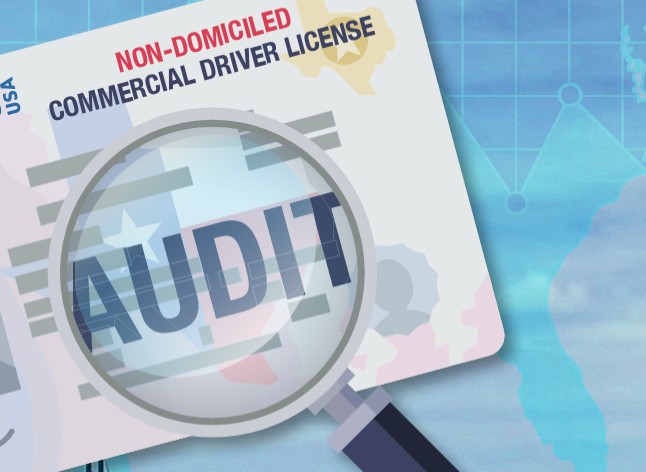
DOT Rule Could Disqualify 194,000 Non-Domiciled CDL Holders
DOT Rule could Sideline 194,000 Non-Domiciled CDL Holders The U.S.

DOT Rule Could Disqualify 194,000 Non-Domiciled CDL Holders

How Truckers Can Skip Sales Tax on Repairs

Truckers: The Weakest Link in a Chain of Systemic Negligence